No laboratory has published residual pulp moisture percentages across the whole market. The best available evidence combines weighed-input yield tests with hands-on pulp observations, while keeping different protocols separate.
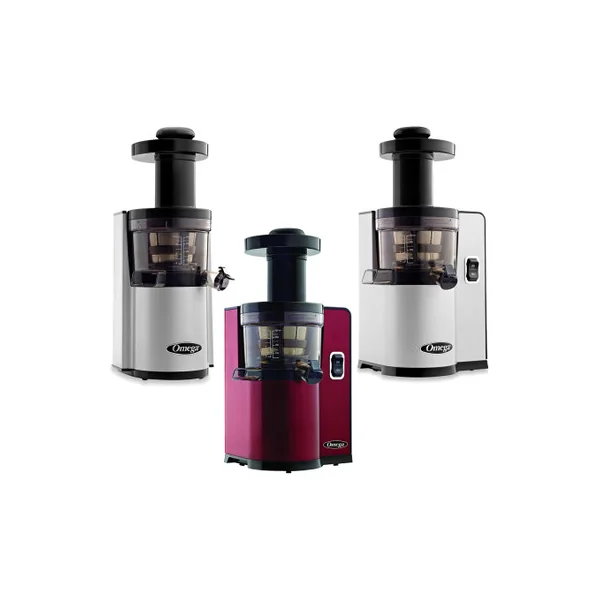
MEASURED + OBSERVEDOmega VSJ843 / 43 RPM vertical
Driest pulp of 30 machines
Food & Wine weighed produce, juice and pulp across fruit, carrot, greens and ginger rounds. It reported more than 13 oz of juice from 1 lb of kale, about twice the tested average, the second-highest overall juice yield, and the driest pulp in the field.
Strongest direct evidence for the user’s literal requirement. The exact residual-water percentage was not instrumented.
MEASUREDNama J3
74.9% green-juice mass yield
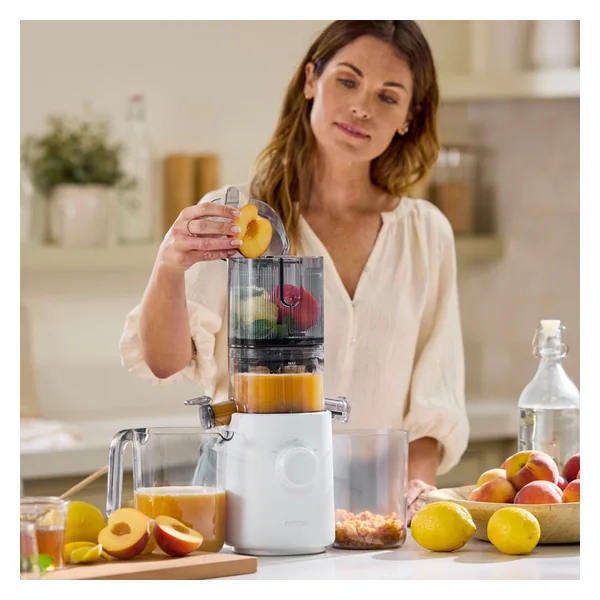
Wirecutter used 8 oz curly kale + 8 oz grapes, then weighed juice and pulp. The J3 produced 11.99 oz from 16 oz—its best green-juice result to date. Food & Wine separately reported more than 12 oz apple juice from 1 lb apples.
Caveat: Wirecutter found its roots-test yield on the lower end; Food & Wine found it slow to grab kale leaves.
SAME-PROTOCOL TABLENinja NeverClog
Strong greens, uneven roots
GearLab’s current table reports 201 mL orange and 205 mL apple output from 10 oz inputs. In its greens/hard-produce columns, Ninja led the compared slow juicers on wheatgrass (26.6 mL), spinach (113 mL) and sweet potato (202 mL), but trailed on carrot (82 mL) and beet (127 mL).
Useful budget evidence, but not a universal extraction win—and the 12+ inch body depth is not truly tiny.
IMPORTANT LIMITDry pulp is not one universal ranking
Produce type changes the winner
Serious Eats used 2 lb of carrots per machine and obtained the same 12 oz carrot result from a compact centrifugal Breville in 26 seconds and an Omega vertical slow juicer in over two minutes. Cold press does not guarantee higher yield for every ingredient.
The recommendation assumes a mixed diet with meaningful leafy/fibrous produce, where the Omega’s evidence is strongest.
Why RPM, “maximum extraction,” and owner photos are not enough
Low RPM may reduce aeration and often accompanies high-yield auger designs, but RPM alone does not quantify extraction. Screen geometry, back pressure, produce, cut size and feed rate all matter. Manufacturer phrases such as “squeezes every drop” and owner reports that pulp feels “bone dry” are treated as claims or anecdotes, not measurements. No reviewed source oven-dried the expelled fibre to calculate its residual water fraction.